Rare Australian Coins – Why Are They Invaluable
Rare Australian coins glorify stories of discovery, national pride, and remarkable rarity. Whether you are a seasoned collector or a novice, this rare Australian coins list helps you understand which coins are crucial and why they are so attractive and sought-after.
Each coin on this Australian rare coin list has uniqueness, history, and something more than currency. They also reflect our shared history, pinned by striking errors, scarcity, or commemorative purposes.
This blog post covers rare Australian coins and highlights their significance even in today’s digital era.
What are the Traits of Australian Rare Coins?
Australian coins have many incredible characteristics. Collectors may prefer them for their historical context. Moreover, scarcity and visual quirks also attract collectors.
Low Mintage and Distribution Scarcity
A limited run adds value because fewer coins survive, increasing interest and cost.
Historical and Commemorative Significance
Collectors often seek coins that commemorate national events or royal milestones.
Minting Errors and Production Anomalies
Common coins can become valuable rarities when off-center strikes, misaligned dies, or incorrect blanks turn them into something special.
Material Composition
Coins made of silver, gold, or nickel, especially during times of transition, have added charm, appeal, and melt value.
Grading Standards and Condition
Collectors and investors prefer coins in near-perfect state or condition, whether Mint State (MS), Extremely Fine (EF), Very Fine (VF), or Uncirculated (UNC).
Collector Demand and Recent Auction Values
Not all valuable coins are ancient. The delicate combination of rarity and demand can push contemporary coins to high prices.
Pre-Decimal Rarities
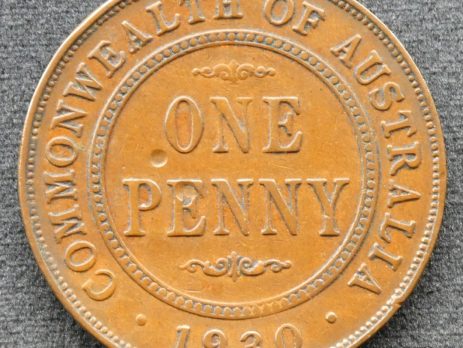
1930 Penny
The 1930 Penny is Australia’s most popular coin rarity. Moreover, it has near-mythical status among collectors. Remember, it has been circulated approximately 1,500 times. It has become the crown jewel of any list of valuable rare Australian coins.
1923 Half-Penny
The low mintage has made this half-penny incredibly hard to find in high grades, especially in uncirculated condition. These attributes make this coin a true rarity and a key coin on any valuable list of rare Australian coins.
1927 Proof Canberra Florin
This rare coin denotes the inauguration of Parliament House and holds significant importance in Australia’s history. It remains a classic collectible today because of its rarity and symbolism.
1852 Adelaide Type II Pound
This remarkable gold coin attests to Australia’s economic independence. Collectors prefer to preserve this iconic coin due to its rich, unforgettable history and tradition.
1918-P George V Gold Half Sovereign
This coin is rare and historically significant because it was struck at the close of WWI. It is a valuable piece that easily belongs on any list of rare Australian coins.
1899-P Queen Victoria Veiled Head Gold Sovereign
The final year of Victoria’s reign has delicately added the much-needed yet crucial historical weight to this finely detailed sovereign. Struck at the Perth Mint, this gorgeously executed coin is one collectors like to preserve because of its age and elegance.
Decimal Coins with Errors and Low Mintage
1966 Round 50-Cent Coin
Australia’s famous silver decimal coin was circulated in limited numbers. Rising silver prices also increased its value, placing it on many lists of rare Australian coins.
1988 50c Coat of Arms Error Proof
This coin has a major alignment error that makes it different from common issues. Coin enthusiasts like this item because of its unique production flaws. You can easily add it to the list of rare Australian coins.
2007 Double-Headed Australian 5 Cent Coin
This amazing coin is highlighted by its two obverse sides. It is an incredible result of a minting mishap. Overall, its appearance makes it a leading and most cherished item in the list of rare Australian coins.
1966 Wavy Baseline 20c Coin
This wavy-baseline coin is a true masterpiece. A subtle die variation created a distinct wave. Interestingly, this minting mistake adds extra charm and appeal, making it a firm favorite for many Australian rare coin collections.
Historic Commemorative and Proof Coins
1967 Goose Pattern Silver Proof $1 Coin
This trial coin features a flying goose and doesn’t include the conventional kangaroo. The coin was never released into circulation. This coin highlights Australia’s most intriguing numismatic stories. It also depicts a moment of design and experimentation.
2012 Hyper-Metallic Coat of Arms 50c Coin
This coin features an advanced multi-metal layer that showcases remarkable craftsmanship. Its unique, appealing design has made it a prominent Australian collectible.
2002 Year of the Outback “Coloured Proof” $1 Coin
This impressive proof coin captures the spirit of the Australian Outback with a vibrant colored design. It's undoubtedly a prime example of regional pride.
How Can We Recognize Rare Coins?
To identify rare Australian coins, use a reliable magnifier and scale. This helps you measure weight accurately and spot fine details. Moreover, you can check mint marks, die cracks, and anomalies to assess classic Australian coins.
There is no harm in comparing coins with a list of Australian coins and reputable sources. Be wary of counterfeits, as scammers create copies of famous coins to deceive collectors.
You can also find the exact value of your coins by visiting reputable sources like Tasmanian Numismatics for valuable insights. Coin enthusiasts can also attend coin shows and events.
Wrapping Up
We hope you enjoyed our post on rare Australian coins. These historic coins not only reflect Australia's rich history but also highlight the massive evolution over the last two centuries. As a true collectible fan, you should not overlook the importance of such striking Aussie coins, as they delicately demonstrate history, culture, and tradition.